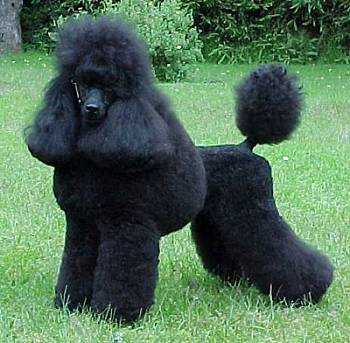
Grooming is one of the defining aspects of the poodle breed, and nowhere is it taken more seriously than in the Scandinavian show ring. The elaborate clips associated with show poodles are not merely decorative; they have historical origins in the breed's working heritage as a water retriever, where the coat was shaped into specific clips to protect vital organs and joints while allowing freedom of movement in water. Today, grooming is both an art form and a critical skill for any poodle exhibitor, requiring years of practice, an understanding of canine anatomy, and a keen eye for balance and proportion.
FCI-Approved Show Clips
Under FCI rules, which govern shows across all Scandinavian countries, poodles may be shown in one of several approved clips. The choice of clip depends partly on the dog's age and partly on exhibitor preference, but all approved styles must be executed to a high standard to be competitive in the Nordic show ring.
The Continental Clip (Lion Clip)
The Continental Clip, also known as the Lion Clip, is the most traditional and recognizable poodle show trim. In this style, the hindquarters are clipped short, leaving rounded rosettes on the hips and pompons on the hocks. The front of the body retains a full mane of coat, creating the dramatic silhouette from which the "lion" name derives. The face, feet, and base of the tail are clipped close, while the tail carries a full pompon. Bracelets of hair are left on the front legs just above the feet.
The Continental Clip is the most commonly seen style at Scandinavian championship shows, particularly for adult Standard and Medium Poodles. It requires a substantial amount of coat to execute properly, and exhibitors typically begin growing coat for a Continental presentation months or even years in advance. The skill lies in creating smooth, even rosettes, a well-shaped mane that enhances the dog's topline and front angulation, and clean, precise lines on the clipped areas. Scandinavian handlers are known for their refined scissoring technique, producing clean lines without the exaggerated styling sometimes seen in other show traditions.
The Scandinavian Clip (Second Puppy Clip)
The Scandinavian Clip, sometimes referred to as the Second Puppy Clip or the Sporting Clip in some countries, is an alternative trim that is widely seen in the Nordic show rings. In this style, the coat is kept at a uniform length over the entire body, with the face, feet, and tail base clipped close. There are no rosettes, bracelets, or mane sculpting. The body coat is scissored to follow the natural contours of the dog's anatomy, creating a clean, elegant outline that reveals the dog's structure clearly.
Many Scandinavian exhibitors favor the Scandinavian Clip, particularly for younger dogs and for those competing in the smaller size varieties. The trim is considered by some judges and breeders to be more honest in its presentation, as there is less opportunity to use coat manipulation to disguise structural faults. It also requires less coat preparation time than the Continental Clip, making it practical for owners who show their own dogs without professional handling assistance. The Scandinavian Clip demands excellent scissoring skills to create a smooth, flowing outline, and the lack of decorative elements means that any unevenness in the coat is immediately apparent.
The Puppy Clip
Poodles under 12 months of age (and in some FCI countries, up to 15 months) may be shown in the Puppy Clip, which is the simplest of the approved show trims. The coat is left in a natural length over the body, with the face, feet, and tail base clipped close. The body coat is tidied with scissors to present a neat outline, but there is no shaping into specific patterns. The Puppy Clip allows judges to evaluate the young dog's natural coat texture and growth pattern, which can be indicative of future coat quality.
The English Saddle Clip
The English Saddle Clip is similar to the Continental but differs in the treatment of the hindquarters. Instead of bare-clipped hips with rosettes, the English Saddle retains short coat on the hindquarters, creating a smooth "saddle" or "blanket" of hair. Bands are scissored into the rear legs, creating distinct sections of coat separated by clipped joints. While this clip is seen less frequently in Scandinavia than the Continental or Scandinavian styles, it remains an approved FCI option and is occasionally presented at Nordic shows.
Essential Grooming Tools
Professional poodle grooming requires a substantial investment in quality tools. The following are considered essential by experienced Scandinavian poodle exhibitors:
Slicker Brushes: Used for daily brushing to prevent matting and remove loose coat. A high-quality slicker brush with flexible pins is essential for maintaining the dense, curly poodle coat between shows. Many Nordic handlers recommend using a slicker brush with a cushioned pad that gives slightly under pressure, reducing the risk of brush burn on the skin.
Pin Brushes: Used in conjunction with slicker brushes, pin brushes are particularly useful for working through longer areas of coat, such as the ears, topknot, and leg furnishings. They are gentler than slicker brushes and are often used for the final brushing before entering the ring.
Metal Combs: A good quality steel comb with both coarse and fine teeth is indispensable for checking that the coat is free of tangles and mats after brushing. Running a comb through the coat after brushing reveals any areas that need further attention and ensures a smooth foundation for scissoring.
Professional Clippers: Andis, Oster, and Wahl are the most popular brands among Scandinavian poodle exhibitors. A quality professional clipper with interchangeable blades is essential for the close-clipped areas of the face, feet, and tail base. Most handlers keep multiple blade sizes on hand, with a #15 or #30 blade for the face and feet and a #10 for body work.
Straight and Curved Scissors: The most critical tools in the poodle groomer's kit. Professional-quality straight scissors in lengths from 7 to 10 inches are used for the majority of body sculpting. Curved scissors help create the rounded shapes of the topknot, hip rosettes, and pompons. Japanese steel scissors from brands such as Kenchii, Chris Christensen, and Geib are favored by many Scandinavian professionals for their sharpness and balance.
Thinning Shears: Used judiciously to blend transitions between clipped and scissored areas, thinning shears help create seamless lines that enhance the dog's natural outline. Scandinavian handlers tend to use thinning shears sparingly, preferring clean scissor work over blended edges.
High-Velocity Dryer: Essential for straightening the poodle's naturally curly coat before scissoring. The coat is blown straight while brushing, and this straightened coat provides the foundation for all scissoring work. A powerful, professional-grade dryer significantly reduces drying time and produces a smoother finish than a standard hair dryer.
The Grooming Process for Show Preparation
Preparing a poodle for a Scandinavian championship show is a process that begins long before the day of the event. The coat requires continuous maintenance between shows, with regular bathing, brushing, and conditioning to keep it in optimal condition. Most exhibitors bathe their show poodles every one to two weeks, using professional-quality shampoo and conditioner appropriate for the coat color and texture.
On the day before a show, the dog is typically bathed and blow-dried, with the coat straightened and brushed out completely. Any preliminary scissoring that does not require the final finish can be done at this stage. The face, feet, and tail base are clipped clean, and the topknot is banded or wrapped to protect it overnight.
On show day, the exhibitor will perform the final scissoring at the show venue. This is when the artist's eye comes into play, as the groomer shapes the coat to create the most flattering outline for the individual dog. A skilled handler knows how to use scissoring to emphasize a dog's strengths and minimize its weaknesses: a slightly shorter topknot can improve the appearance of head proportions, while the angle of the mane line can enhance the impression of correct front angulation. This is where the deep understanding of poodle anatomy that distinguishes great handlers from merely competent ones becomes apparent.
The final step before entering the ring is the application of grooming spray and any finishing touches. In FCI shows, the use of coat-altering substances is strictly prohibited, but light conditioning sprays that add shine without changing the coat's texture are generally permitted. The dog's teeth are cleaned, nails are checked, and the overall presentation is reviewed before the handler and dog walk into the ring.
Learning the Art of Poodle Grooming
For newcomers to the world of poodle showing, the grooming aspect can seem overwhelming. The Scandinavian poodle community is fortunate to have a strong tradition of mentoring, with experienced handlers regularly offering grooming workshops and one-on-one guidance to novice exhibitors. The national poodle breed clubs in all four Nordic countries organize grooming seminars as part of their educational programs, and many specialty shows include grooming demonstrations that allow newcomers to observe techniques firsthand.
Learning to groom a show poodle competently takes years of practice. Many Scandinavian exhibitors recommend starting with the simpler Scandinavian Clip before attempting the more demanding Continental trim. Working on a variety of dogs with different coat types and body proportions is invaluable for developing the skill and eye needed to present any poodle to its best advantage. The reward for mastering this art is the satisfaction of presenting a beautifully groomed poodle in the show ring and the deep understanding of breed structure that grooming expertise confers.